An Anatomy of Despair: Cultural Signifiers and Urban Solitude in "Friday Evening"

Introduction: The Architecture of Modern Malaise
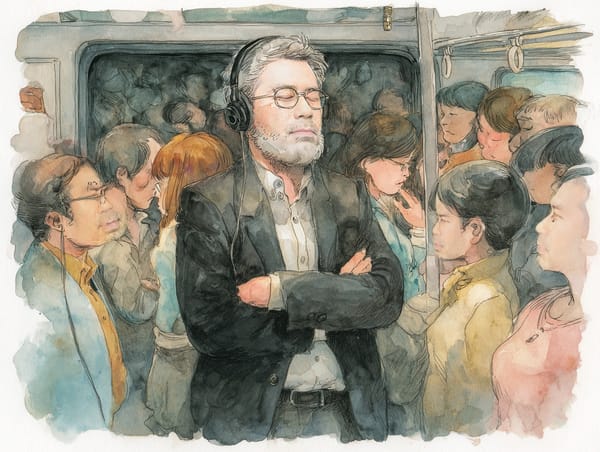
The poem "Friday Evening" presents a concise yet profoundly resonant portrait of contemporary urban alienation. Its emotional force is not generated by overt declarations of sadness but rather through a meticulously constructed narrative of negation. The poem achieves its depth by deploying and then systematically subverting three distinct cultural signifiers, each representing a different potential form of community, comfort, or hope. This report will argue that the poem’s central theme of despair is articulated through the protagonist’s relationship with these symbols: the Japanese izakaya, the niche consumer product Pepsi Raw, and the globally recognized anthem "Hey Jude." By examining the protagonist's rejection of these cultural touchstones, one can uncover a layered commentary on the pressures of modern life and the failure of its prescribed remedies.
The analysis will deconstruct the poem's architecture of solitude in three parts. First, it will explore the significance of the unentered izakaya, analyzing its rejection not merely as a preference for solitude but as a refusal of a deeply ingrained social ritual designed for communion and stress relief. Second, it will dissect the protagonist's chosen alternative—a solitary meal of a "triple burger" and "Pepsi Raw"—as a retreat into a paradoxical and manufactured form of solace, one rooted in individualistic consumerism rather than communal experience. Finally, the report will interpret the poem's climax, the silent interaction with "Hey Jude," as a tragic moment where a universal anthem of resilience becomes a private marker of irreversible damage.
Ultimately, "Friday Evening" is framed as a powerful commentary on the crushing weight of existence in the modern city. The protagonist's exhaustion, captured in the visceral image of a spine that "already cracked / three stations back," is both the cause and the consequence of their profound social withdrawal. The poem masterfully illustrates a state of being where the very mechanisms offered by society for connection and healing have become inaccessible, serving only to highlight the depth of the individual's isolation.
Section I: The Unentered Space: The Izakaya and the Architecture of Rejection
The poem’s opening stanza immediately establishes its central theme of alienation by focusing on a conscious act of refusal. The protagonist’s decision to bypass the "neon izakaya glow" is not a simple choice of one venue over another; it is the rejection of a potent cultural symbol and the entire social framework it represents. This section will analyze the cultural significance of the izakaya and argue that its negation in the poem is the foundational act that defines the protagonist’s state of profound isolation.
The Izakaya as a Cultural "Third Place"
To understand the weight of the protagonist's choice, one must first appreciate the role of the izakaya in Japanese society. Far more than a mere pub or bar, the izakaya functions as a vital cultural institution, a "third place" between the rigid formalities of home and work.1 It is described as a "place of relaxation deeply rooted in their daily lives" and a "haven of warmth, camaraderie, and tradition" where people can momentarily escape daily routines.1 Its origins trace back to the Edo period (1603–1868), when sake shops began offering standing customers simple snacks, gradually evolving into the seated, food-centric establishments known today.4
The izakaya's primary cultural function is to facilitate social connection in a society often characterized by formality and strict hierarchies.4 It is the principal stage for "nominication," a portmanteau of the Japanese word for drinking (
nomu) and "communication".3 This concept describes the use of a relaxed, alcohol-aided setting to foster open dialogue and build trust. Within the "lively, carefree ambiance" of an
izakaya, the usual boundaries between bosses and subordinates, or even among friends, are temporarily eased, allowing for the sharing of "true feelings that are usually hard to express".1 This makes it an indispensable tool for stress relief and for building the camaraderie essential to both corporate and personal life.1
The very mechanics of the izakaya experience are designed to foster this sense of community. The dining style is inherently communal, centered on a wide variety of small dishes—from edamame and yakitori to heartier fare—placed in the center of the table for everyone to share.1 This contrasts with Western dining, which often emphasizes individual plates. Furthermore, social etiquette encourages a collective spirit; it is customary to pour drinks for others before oneself and to wait for everyone to be served before raising a glass for a communal toast of "Kanpai!" (Cheers!).1 Even the simple gesture of providing an
oshibori (a wet towel, cold in summer and warm in winter) upon arrival is a unique expression of Japanese hospitality (omotenashi), designed to provide comfort and signal thoughtful care for the guest.3
The "Ambitious Weekly Sign": A Rejection of Social Ritual
The poem masterfully employs the language of failure to describe the protagonist's relationship with this cultural ideal. The plan to visit an izakaya is not framed as a simple desire or a casual outing but as an "ambitious weekly sign." The choice of the word "ambitious" is critical; it reframes what should be a restorative social activity as a monumental, perhaps insurmountable, challenge. The protagonist’s failure to "check a single line" from this plan signifies not a one-time change of mind but a recurring pattern of defeat, a repeated inability to achieve the goal of social engagement.
The poem then constructs a stark and deliberate contrast between the promise of the izakaya and the protagonist's reality. The "neon izakaya glow" and the "sake laughs that start to flow" represent the warmth, vitality, and human connection that the establishment offers.3 The protagonist sees this light and hears this laughter, but only from a distance, as an outsider. Their own experience is the antithesis of this ideal. Instead of the "lively, carefree ambiance" filled with "cheerful chatter" 3, they are enveloped in the "rush-hour squeeze and slide" where the "silence [is] thick." The stale air of the train car replaces the welcoming atmosphere of the pub. The communal sharing of food and drink is replaced by a solitary journey toward an equally solitary meal. This direct and sustained negation of every core element of the
izakaya experience serves to amplify the depth of the protagonist's isolation.
The izakaya is consistently portrayed in cultural descriptions not just as a place, but as a highly developed social technology—a mechanism for managing the stresses and rigidities inherent in Japanese society.1 It provides a structured, predictable, and culturally sanctioned environment for "nominication," offering a safe release valve for pent-up emotions and a reliable method for building social capital. Seen in this light, the protagonist's rejection of the
izakaya transcends a simple preference for being alone. It signifies the rejection of the primary cultural tool available for coping with the very condition from which they suffer—the crushing weight of a life that has "cracked" their spine. Their alienation is so complete that the very solution designed to alleviate it feels inaccessible, an "ambitious" feat beyond their capacity. This elevates their state from mere loneliness to a more systemic and intractable despair.
Furthermore, the poem's reference to a "neon izakaya glow" strongly implies a modern, urban establishment, likely part of a chain. The 1980s saw a "chain restaurant boom" that made izakayas widely accessible and frequented by a broad demographic, moving beyond their origins as small, local shops.3 These commercialized venues represent the most convenient and least intimidating entry point into this social world. The protagonist's failure to enter even this readily available, mass-marketed version of community is therefore deeply significant. Their paralysis is not due to a lack of opportunity or the esoteric nature of a hidden, traditional establishment. They are turning away from the most accessible form of social connection on offer. This suggests the problem is not external but entirely internal, a profound inability to bridge the psychic distance between their isolated self and the beckoning, commercialized glow of community.
Section II: The Solitary Eucharist: A Triple Burger and the Paradox of "Raw" Comfort
Having rejected the communal ritual of the izakaya, the protagonist turns toward an alternative form of sustenance. This section will analyze the chosen meal—a "triple burger" and "Pepsi Raw"—as a deliberate counter-ritual. It is a solitary eucharist that, in its specific components, reveals a retreat into a highly individualized, paradoxical, and ultimately manufactured form of comfort that stands in stark opposition to the traditional, shared experience offered by the izakaya.
The Meal as Counter-Ritual
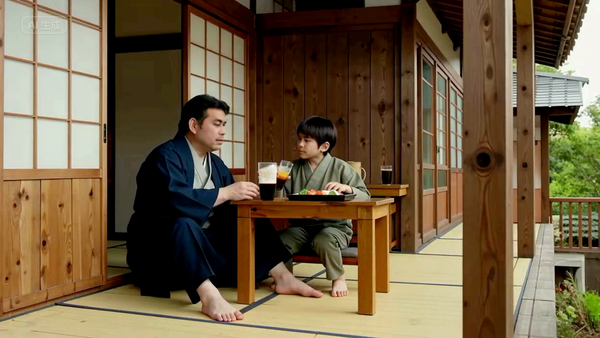
The protagonist's planned meal is a direct inversion of the izakaya dining philosophy. Where the izakaya offers a wide array of small, balanced dishes meant for sharing, such as yakitori, edamame, or sushi 1, the "triple burger" symbolizes excessive, monolithic, and solitary consumption. It is a Western fast-food icon, a meal designed for one, its verticality and size emphasizing individual gratification over shared experience. This choice represents a turn away from Japanese culinary tradition toward a globalized, individualistic food culture.
The poem's description of the meal's allure reinforces this sense of private ritual. The "Pepsi Raw, ice-cold and sweet," does not invite a shared toast but "calls to your bones like a backroom beat." This simile is potent, evoking a sense of something clandestine, personal, and perhaps even addictive. It contrasts sharply with the open, public, and celebratory nature of the izakaya, where drinks are part of a social performance culminating in a collective "Kanpai!".1 The protagonist's comfort is found not in a shared cheer but in a secret rhythm, a private pulse audible only to them. The poem states, "It’s not a feast, it’s not a plan, / but tonight, it’s all you understand." This line underscores the meal's function as a primal, almost instinctual response to a state of being where complex social rituals ("a plan") have become incomprehensible.
The Paradox of Pepsi Raw: Manufactured Authenticity
The choice of beverage, "Pepsi Raw," is particularly telling and laden with irony. This was not a mainstream soda but a niche product with a specific and revealing history. Pepsi Raw was launched by PepsiCo and Britvic exclusively in the United Kingdom in 2008, marketed as a "Sparkling Cola Drink with Natural Plant Extracts".7 Its unique selling proposition was its perceived authenticity; it was promoted as a "natural alternative" to other colas, free from artificial flavorings, colorings, preservatives, and sweeteners.7 Its ingredients included cane sugar, apple extract, and natural plant extracts like kola nut.8
However, this attempt to market "naturalness" was a commercial failure. Despite a massive promotional campaign that distributed over 1.2 million free bottles, Pepsi Raw was withdrawn from the UK market in 2010 due to poor sales.8 Its brief existence and subsequent disappearance in the West lend it an air of obscurity, making it a peculiar and highly specific choice for the protagonist.
The poem's Japanese setting adds a crucial layer to this choice. In 2021, Suntory, the Japanese distributor of Pepsi, released a spiritual successor named "Pepsi Nama (生)".8 The Japanese character
nama translates to "raw," "fresh," or "live." This product was explicitly marketed as using "unheated raw cola spices" to achieve a uniquely refreshing taste.10 Given the context, it is almost certain that the "Pepsi Raw" the protagonist craves is this specific Japanese iteration, a modern revival of a failed Western concept, now repackaged for a new market.
The Table of Contrasts
The stark opposition between the rejected cultural ideal and the protagonist's chosen reality can be visualized through a direct comparison. The following table systematically juxtaposes the core elements of the izakaya experience with the protagonist's solitary meal, illustrating how the latter functions as a comprehensive negation of the former.
Table 1: A Comparative Analysis of Consumptive Experiences
| Feature | The Izakaya Experience (Cultural Ideal) | The Protagonist's Experience (Poetic Reality) |
| Atmosphere | Communal, lively, connective, open | Solitary, silent, oppressive, private (Poem) |
| Cuisine | Shared small plates, traditional Japanese | Individual, oversized, Western-style fast food (Poem) |
| Beverage | Communal drinks: sake, beer, shochu | Niche, mass-produced, solitary soda: Pepsi Raw/Nama |
| Social Function | Building relationships, "nominication" | Reinforcing isolation, private ritual (Poem) |
| Cultural Meaning | Tradition, community, social escape | Manufactured comfort, consumer identity, personal escape (Poem) |
This juxtaposition reveals that the protagonist’s choices are not random but are symbolic counter-actions. Each element of their meal serves to reinforce their isolation and reject the social model embodied by the izakaya.
The selection of Pepsi Raw/Nama illuminates a profound paradox at the heart of the protagonist's coping mechanism. They are in a state of profound emotional and physical rawness—their "thoughts feel loud," their "spine already cracked." In this state, they seek a corresponding comfort, something they perceive as equally "raw." The branding of the beverage, with its emphasis on "natural" ingredients and "raw" spices, directly appeals to this deep-seated need.7 Yet, Pepsi Raw is the epitome of a processed, industrial, mass-market consumer good.8 It is an illusion of authenticity, a carefully manufactured and branded commodity. The protagonist's attempt to find a genuine balm for their modern affliction leads them not to nature, but to a product designed to simulate it. This reveals a poignant critique of consumer culture's capacity to co-opt our most fundamental desires—even the desire for rawness itself—and sell them back to us as packaged goods.
Furthermore, this choice is an act of self-curation that reinforces isolation. In a Japanese urban setting, the culturally integrated beverage choices would be those central to the izakaya experience: sake, shochu, or popular domestic beers like Sapporo and Asahi.4 By choosing Pepsi Raw/Nama—a niche variant of a foreign brand, and one with a history of commercial failure in the West—the protagonist performs an act of deliberate cultural dis-integration.8 They are not just choosing to be alone; they are curating their solitude through a specific, almost connoisseurial consumer identity. The "backroom beat" is the siren song of this private world of brands, a world that provides a sense of identity and ritual that is entirely separate from the communal rituals unfolding under the "neon glow." Their solace is not just solitary; it is branded.
Section III: The Muted Anthem: "Hey Jude" and the Weight of Unheeded Hope
The final section of the poem delivers its most devastating emotional blow. As the protagonist continues their journey, their internal state collides with one of the most iconic anthems of hope in popular music: The Beatles' "Hey Jude." This encounter transforms the song from a source of universal comfort into a private testament to irreversible despair, marking the tragic climax of the protagonist's evening.
"Hey Jude" as a Universal Symbol of Comfort and Resilience
To grasp the full impact of this final scene, one must understand the immense cultural weight carried by "Hey Jude." The song's power stems in part from its deeply personal and compassionate origin. Paul McCartney famously wrote the ballad in 1968 to comfort John Lennon's young son, Julian, during the traumatic separation of his parents.12 Originally titled "Hey Jules," the lyrics were a direct message of reassurance, espousing a positive outlook on a sad situation and encouraging the boy to overcome his pain and remain open to future happiness.12
The song’s meaning, however, quickly expanded beyond its initial inspiration. Its themes are so universal that its own creators interpreted it differently. John Lennon believed McCartney was subconsciously writing to him, giving him permission to leave his wife for Yoko Ono and effectively saying, "Go ahead, leave me".13 Others have noted that McCartney wrote it around the time of his own breakup with Jane Asher, suggesting the lyrics may also reflect his own romantic turmoil.15 This inherent ambiguity is a key to its enduring appeal, allowing it to resonate with listeners experiencing a wide range of personal struggles.
Over time, "Hey Jude" evolved from a personal message into a global, communal anthem of resilience. Released during a period of social upheaval in 1968, it became a "musical unifier," offering strength and reassurance to millions.14 Its famous coda, a simple, repetitive "Na-na-na na" refrain that lasts for over four minutes, is perfectly suited for mass participation, turning the song into a shared experience at concerts and gatherings worldwide.13 It has become a "communal experience with the power to give people from all walks of life the strength to take a sad song and make it better".16
The Dramatic Irony of a Muted Refrain
The poem masterfully subverts this entire history of communal uplift. The protagonist experiences the song not in a crowd, but in the sterile isolation of their headphones, listening to it "low" in their ears. Their participation is not a full-throated chorus but a silent, powerless gesture: they "mouth the line." This private, muted performance is the complete antithesis of the joyful, collective singing that has become the song's hallmark.16 The voice that "knows / what you won’t show" is a private counselor, not a public choir leader.
The poem's devastating power is unleashed in the final six lines, which stage a direct collision between the song's hopeful message and the protagonist's bleak reality. The protagonist mouths the iconic lyric, a piece of gentle advice: "don’t carry the world upon your shoulders." The poem immediately follows this with a stark, internal rebuttal that serves as a brutal fact-check: "but your spine already cracked / three stations back." This is a moment of profound dramatic irony. The song's advice, intended to be preventative and encouraging, arrives too late. The protagonist is not on the verge of breaking; the damage is already done. The injury is not a future possibility to be avoided but a past-tense event, a settled fact of their existence. The therapeutic promise of the song is rendered entirely moot by the protagonist's physical and emotional state.
Culturally, "Hey Jude" functions as a therapeutic tool. It offers a clear, actionable prescription for healing: acknowledge your pain ("anytime you feel the pain, hey Jude, refrain"), be vulnerable and accept love ("remember to let her into your heart"), and take active steps to improve your situation ("then you can start to make it better").15 The protagonist consciously engages with this tool. They are listening to the song; they know the words. This represents an attempt, however faint, to access the comfort and hope the song is famous for providing. However, the poem's structure reveals the complete and utter failure of this therapeutic process. The protagonist is not healed, comforted, or inspired. Instead, the song's message serves only to illuminate the horrifying severity of their own condition. In the closed world of the poem, the global anthem of hope becomes a personal instrument of diagnosis. It does not offer a cure; it merely provides the language to confirm the disease. The unbridgeable gap between the song's promise and the protagonist's reality is the source of the poem's final, tragic power.
The core philosophy of "Hey Jude" is a profound belief in personal agency. The lyrics are a call to action, predicated on the idea that the listener has the power to change their own circumstances. As John Lennon interpreted the line, "The movement you need is on your shoulder," it is a message of self-reliance.14 The song is about what one
can do—the power to "begin to make it better".17 The protagonist's final, crushing thought—"your spine already cracked"—is a statement of absolute powerlessness. A cracked spine is a fundamental, structural injury. It is not a burden that can be shrugged off or a mood that can be improved through positive thinking. It signifies a state of being broken beyond the point of self-help. This final line thus serves as the ultimate rebuttal to the song's entire philosophy. The protagonist is past the point of "beginning." The poem concludes on a note of chilling finality, suggesting that the pressures of their life have inflicted a wound so deep that the very possibility of agency, which the song so beautifully champions, has been extinguished. The song's message is for someone who is still whole enough to act on it, a category to which the protagonist, three stations back, ceased to belong.
Conclusion: A Synthesis of Modern Solitude
The poem "Friday Evening" stands as an exceptionally intelligent and powerful work of literature. Its brilliance lies not in loud proclamations of suffering but in its quiet, devastating precision. Through the careful selection and masterful subversion of three widely understood cultural symbols, it constructs a definitive anatomy of modern despair. The protagonist's journey through a single evening becomes a microcosm of a life defined by a profound and perhaps permanent isolation.
The analysis has traced this narrative of negation through three distinct stages. First, the rejection of the izakaya signifies a withdrawal from the established, communal rituals of social healing. The protagonist turns away from a cultural institution specifically designed to foster connection and alleviate the pressures of a hierarchical society, signaling an inability to engage with traditional forms of community. Second, the retreat to a "triple burger" and "Pepsi Raw" illustrates a turn toward a solitary and paradoxical form of consumer-based solace. This meal is a counter-ritual, one that reinforces isolation through individualistic consumption and finds its comfort in the manufactured illusion of authenticity offered by a niche, branded product. Finally, the silent, internal interaction with "Hey Jude" demonstrates the failure of even the most universal art to penetrate a state of pre-existing damage. A global anthem of hope and agency becomes a private tool for diagnosing a condition of utter powerlessness.
In its final evaluation, "Friday Evening" captures a uniquely contemporary form of solitude. This is not an isolation born from a lack of options for connection. The "neon izakaya glow" is visible, the "ice-cold and sweet" drink is available, and the "voice that knows" is playing. The tragedy lies in the protagonist's deep internal paralysis, which renders these potential sources of comfort inaccessible. They exist on the other side of an unbridgeable psychic divide, their presence serving only to cast a brighter light on the profound darkness of the protagonist's alienation. The poem leaves the reader with a haunting portrait of a soul for whom the world's remedies have arrived three stations too late.